Festival · Residency · Sept 2018 → Oct 2018 · Oi Futuro Flamengo, Rio de Janeiro · Praça Mauá
Multiverso
A festival of generative art and creative coding in Rio de Janeiro, launched as the first in Brazil: workshops, an artist residency, masterclasses and more than fifty interventions and performances in schools, squares, under overpasses, at train stations and in cultural centers, all free of charge.
Multiverso was born with the subtitle "the first festival of generative art and creative coding in Brazil", selected by the Oi Program for Incentivized Cultural Sponsorship 2017/2018. Directed by Gisele Andrade and curated by Igor Abreu, it explored the limits of creation, the unpredictability of artistic processes and ways to make public space more welcoming. Art, technology and society were the axes of its first edition, approached from a Brazilian and Latin American perspective: the curators invited collectives and artists from Rio de Janeiro, other Brazilian states and Latin America.
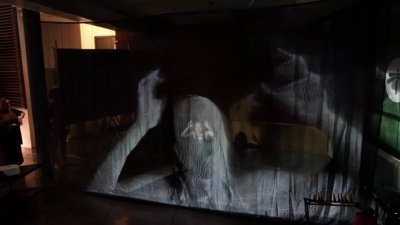
The program spread across the South Zone, the North Zone and downtown Rio. Workshops in creative coding, handmade electronics, sound art and parametric design travelled through Lab Oi Futuro, Arena Dicró, the Adolpho Bloch State Technical School, the Imperator (João Nogueira Cultural Center) and the Viaduto de Laranjeiras Cultural Occupation. The masterclasses brought together Malu Fragoso, Liana Brazil, Daniel Morena, Fred Paulino, Adriano Belisário, Cristina Ribas, Morena Mariah and the Argentine artist Jorge Crowe, and the Oi Futuro cultural center hosted performances and talks.
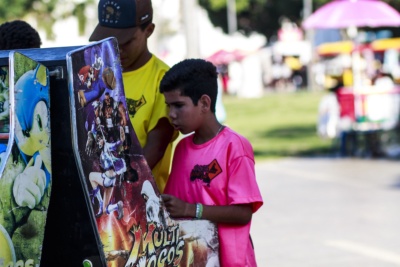
An artist residency of several months gathered Alberto Harres, André Anastácio, Caio Chacal, Carlos Oliveira, Gabriela Castro, Harrison Mendonça, Marlus Araujo and Tainá Simões, whose research became interventions at Praça Mauá, Central do Brasil station and Praça Carlos Del Prete, under the Laranjeiras overpass. From that residency came Street Fliper, by Marlus and Caio Chacal: an arcade arena in a public square, with independent games that discuss Brazilian reality.
In all, there were more than fifty interventions, performances and art-and-science outreach activities, all free of charge. The book Multiverso (Barléu Edições, 2020), edited by Gisele Andrade, records the festival in texts and images and gathers articles and new works by the guest artists.