Timeline
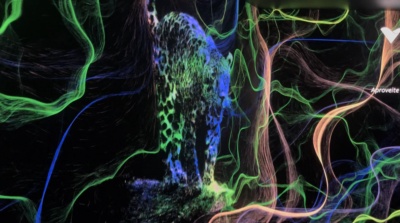
An immersive, interactive tunnel at Rock in Rio 2026 that leads the audience into ECCO by LightWire: rivers of light form forest scenes along a 25-metre corridor, with two million particles alive in real time, made in Braid (WebGPU) on a Mac Studio, and a camera places visitors inside the landscape. Artists: Dimitre Lima, Gabriela Castro and Marlus Araujo. Concept, creative direction and production by Megadiverso, with Vale as main sponsor.
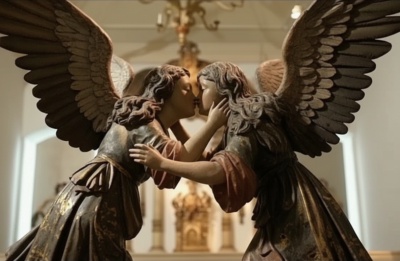
An audiovisual fable about loss, historical responsibility and rites of rebirth, made from the collection and architecture of the Museu da Inconfidência.
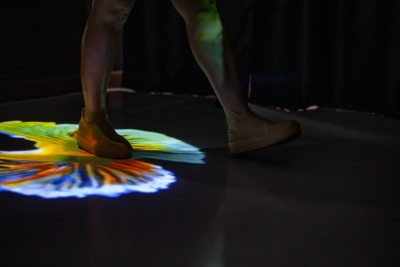
An interactive floor where each step a visitor takes leaves a living trail: shapes, colours and creatures emerge on the ground, generated in real time with the help of artificial intelligence. Fungi and digital dreams intertwine in an ecosystem that responds to human presence. Commissioned by the curators of Artelligent 2025, at CAIXA Cultural Salvador.
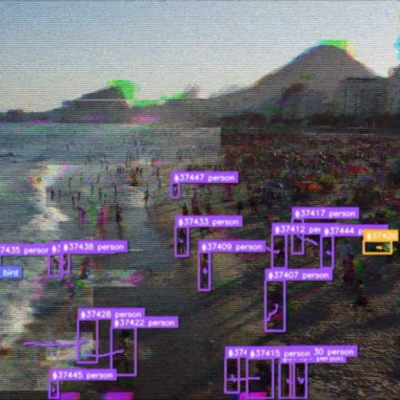
The entrance poster of Isto Não é um Prompt looks at the street: a computer vision system detects, in real time, the people, vehicles and objects passing by the façade and shows how the machine sees us.
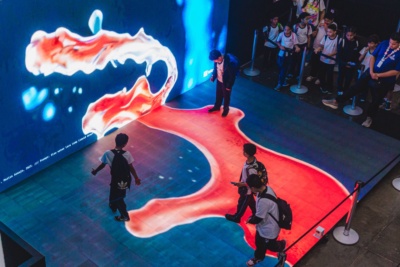
The four elements as states in permanent mutation: the visitor's movement is returned in real time as elemental matter, with artificial intelligence acting as a creative accelerator.
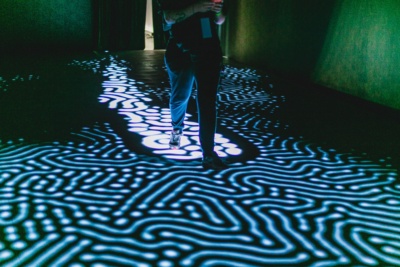
Interactive floor inspired by Mycelium Studies: reaction-diffusion patterns grow and dissolve under the visitors' steps.
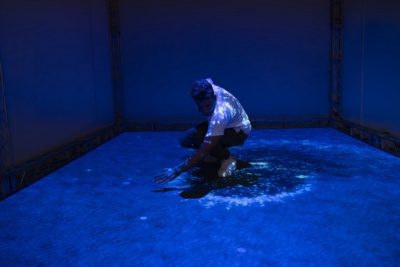
Interactive installation that captures the mysterious, fleeting beauty of plankton bioluminescence: a floor where each step sets off a trail of light.
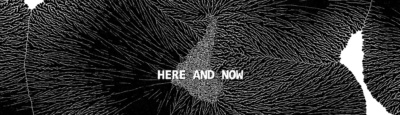
Generative series born as NFTs and grown into immersive installations: reaction-diffusion simulations that echo the fungal networks underpinning life on the planet.
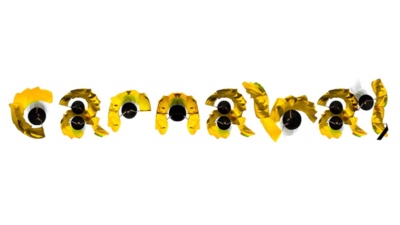
Motion studies for the Rio Carnaval identity, a brand created by Tátil Design for Liesa from the ginga of the porta-bandeiras; Marlus collaborated with creative coding and motion.
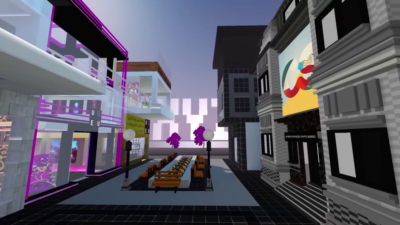
Metaverse-native museum, created in 2021 with Ana Cunha to promote Brazilian digital art and culture and to preserve the memory of crypto art in the country: galleries, an artists' district, educational programming and a collection.
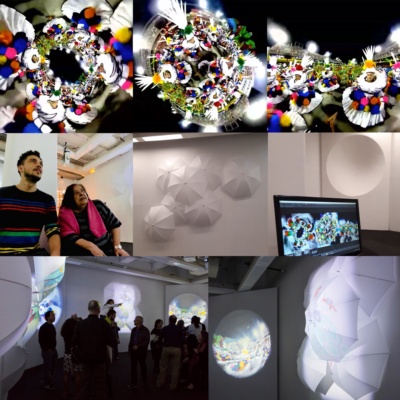
An installation by Rosa Magalhães with Marlus Araujo at Multiplicidade 2019: the carnival designer's drawings and 360° footage of the 2019 Champions' Parade, projected onto white umbrellas that fold the image into kaleidoscopic volumes.
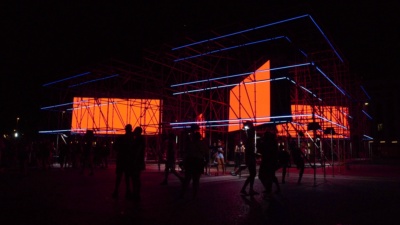
An urban digital sculpture created by ten multidisciplinary artists during a three-month residency at Oi Futuro's Transmedia Lab, the Conexidade residency, curated by Batman Zavareze: architecture, design, animation, code, light and sound in a large-scale collective work.
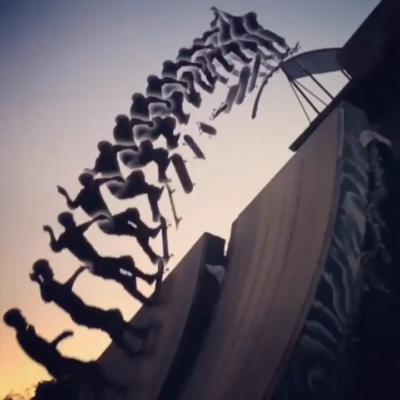
A visual effect that draws a trick in the air, frame by frame, like a chronophotograph. It was born for Bob Burnquist's mega ramp performance at Conexidade in 2018 and reached its real-time version on the Parque Madureira half pipe, at the 2026 Imagina Festival.
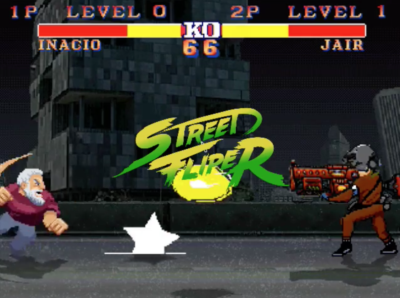
An open-air arena for independent games in a public square, inspired by arcades. The first release is O Golpe Final, a fighting game built in MUGEN about the coup that divided the country.
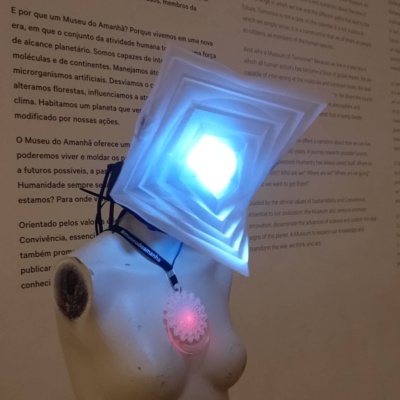
A robotic sculpture of origami and sensors, made with Gabriela Castro, that needs human presence to awaken and looks back at whoever faces it. It was born at the Hiperorgânicos 7 open lab, at the Museu do Amanhã, in 2017, and closes the exhibition Isto Não é um Prompt, in 2025.
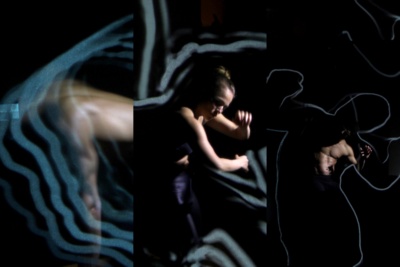
A research lab on body, image, motion and technology, formed in 2015 at the Faculdade Angel Vianna: the Kinect captures the dancers, and TouchDesigner returns their bodies as light, color and trails projected on stage, in real time.
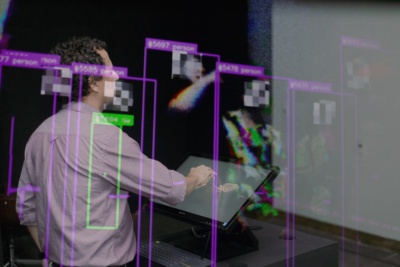
Marlus's first solo exhibition on artificial intelligence as presence, language, specter and mirror, curated by Paula Martini: Involuntary Capture, ElementAIs, O Tao do Algoritmo and Maboroshi.
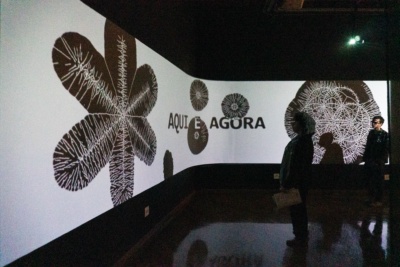
Here and Now is the first solo exhibition by Marlus Araujo, featuring immersive and interactive video installations, showcased at Senac Lapa Scipião (São Paulo) in October 2022. The research is based on a series of experiments developed through the reaction-diffusion model, also known as Turing patterns, which allows for the simulation of a range of natural phenomena, from chemical reactions to the biological development of forms.